
Industry Background
Agentic AI differs from earlier AI tools in a fundamental way. Rather than responding to a prompt, an AI agent can plan, take actions, call external tools, and adapt its behaviour across complex workflows — compressing what once required human decision-making across multiple steps into a single automated process. By mid-2026, Gartner places agentic AI at the Peak of Inflated Expectations on its Hype Cycle, with more than 60% of organisations planning deployment within two years, yet only 17% having done so to date.
Early deployments are delivering striking results in isolated environments. Digital bank Nubank reported up to twelvefold efficiency gains in a major data migration after deploying autonomous AI coding agents. Firms deploying AI in agent-assisted workflows are reporting productivity gains of 20–60% in specific processes. BlackRock and S&P Global are using coordinated AI agent teams for portfolio management and risk analytics, collapsing workflows that once took days into minutes.
Why This Matters
The gap between pilot success and enterprise-scale deployment is not primarily a technology problem — it is an infrastructure and governance problem. Seventy percent of organisations that launch AI initiatives discover their data architecture cannot handle production-level AI workloads. Fragmented legacy systems, approval layers, and siloed data are the primary barriers. Companies that resolve these structural constraints early will establish durable competitive advantages that latecomers will struggle to close.
Implications for Businesses
Organisations should treat agentic AI as an infrastructure investment, not a software purchase. Building a clean, unified data layer is the prerequisite, not the follow-up. Companies that prioritise governance frameworks — covering accountability, security, and economic controls — will scale faster and with less operational risk than those chasing deployment speed without structural readiness.
Implications for UAE Market
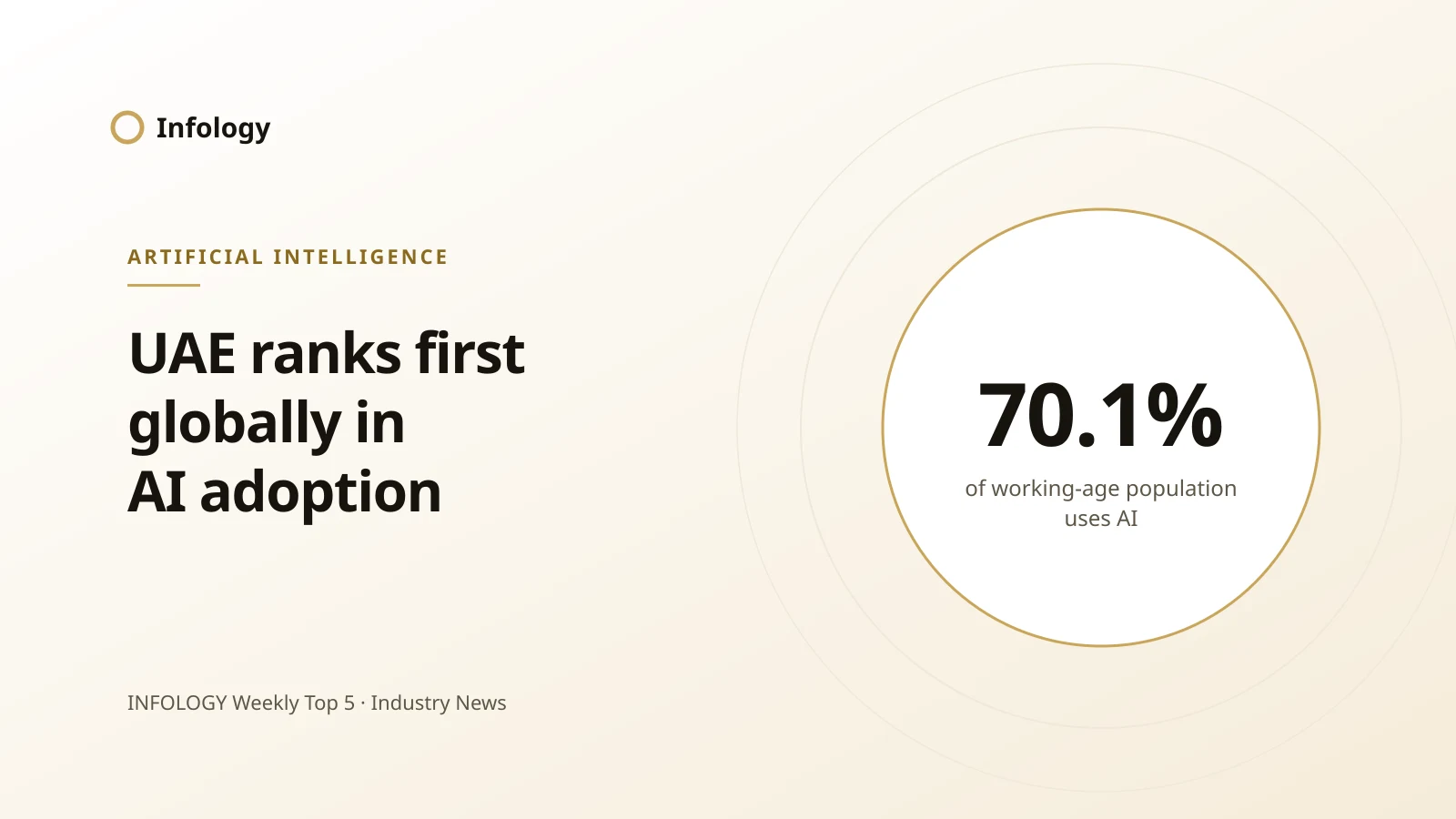
The UAE's position as a regional AI hub — reinforced by the National AI Strategy 2031 and the concentration of AI talent and infrastructure in Dubai and Abu Dhabi — creates a strong baseline for agentic deployment. UAE enterprises in financial services, logistics, and real estate are particularly well-positioned to absorb agentic tools into high-volume, repetitive workflows. However, the same infrastructure gaps affecting global firms apply here. UAE businesses should assess data readiness before committing to large-scale agentic programmes.
Implications for International Companies
For companies operating across the UAE, Georgia, and the US, agentic AI offers the potential to unify cross-border operations — standardising compliance checks, customer service workflows, and supply chain coordination across multiple markets simultaneously. International players who invest now in governance architecture will be able to extend agentic systems across markets far more rapidly than those who retrofit governance onto existing deployments.
Suggested Actions for Executives
Conduct an honest audit of your current data infrastructure before launching any agentic AI initiative. Identify three to five high-volume, rule-based workflows where agentic tools can demonstrate clear ROI within 90 days. Establish an internal AI governance committee with clear accountability for outcomes, risk, and cost. Brief your board on the difference between AI experimentation and production-scale AI, and reframe the conversation accordingly.