Industry Background
The scale of change is significant. In 2025 alone, tariff escalations between major economies reshuffled more than $400 billion in global trade flows, while more than 3,000 new trade and industrial policy measures were introduced globally — an average of more than eight per day. In 2026, US tariff policy has settled at 20–32% on Chinese goods, 18% on Indian goods, and 25% on countries transacting with Iran. These are not negotiating positions — they are structural features of the trade environment.
McKinsey's Geopolitics and the Geometry of Global Trade 2026 Update identifies a sustained shift away from hyper-globalised, single-source supply chains toward regionalised, diversified, and strategically redundant networks. Companies are qualifying multiple suppliers across different regions, building higher strategic inventory buffers, and relocating manufacturing or assembly operations closer to end markets — a process variously described as nearshoring, friendshoring, or supply chain resilience investment.
Why This Matters
The companies most exposed to this environment are those that optimised their supply chains for cost efficiency under the assumptions of the previous decade — low tariffs, stable trade relationships, and predictable logistics costs. Those assumptions are now structurally invalid. Businesses that have not yet invested in supply chain diversification and regional resilience are carrying concentration risk that could translate rapidly into cost volatility, inventory shortfalls, or regulatory non-compliance.
Implications for Businesses
Supply chain strategy must now incorporate geopolitical risk as a core variable alongside cost, quality, and lead time. This does not mean abandoning established supplier relationships — it means building redundancy alongside them. Companies should map their supply chains for single-point-of-failure exposures, particularly in components or materials sourced from geopolitically sensitive regions. Critical minerals — central to technology hardware, clean energy equipment, and defence products — deserve particular attention given escalating strategic competition over these resources.
Implications for UAE Market
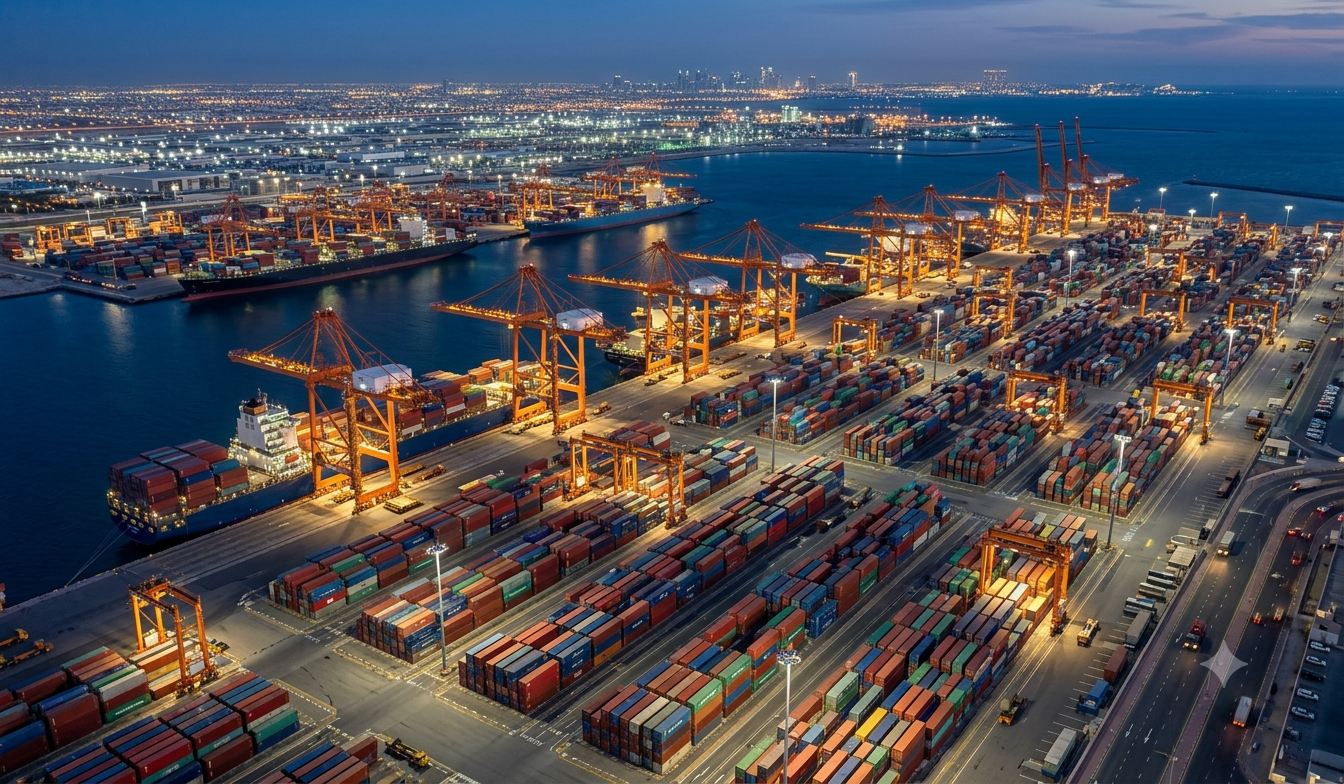
The UAE's position as a global trade hub — with Jebel Ali Port, Al Maktoum Airport, and an extensive network of bilateral trade agreements — makes it a natural beneficiary of supply chain reconfiguration. As companies seek to reduce dependence on single-region supply chains, the UAE is increasingly positioning itself as a re-export and value-added manufacturing hub connecting Asia, Europe, and Africa. UAE businesses in logistics, warehousing, and trade finance are well-positioned to capture this structural shift, provided they invest in capacity and compliance infrastructure to support the complexity of new trade flows.
Implications for International Companies
For American, European, and Georgian companies operating globally, the UAE offers a genuinely strategic role in a reconfigured supply chain architecture. Its free zone infrastructure, minimal tariff environment, and geographic centrality make it an effective hub for goods destined for MENA, East Africa, and South Asia. Companies reviewing their supply chain geography should explicitly evaluate whether a UAE logistics node could reduce their exposure to geopolitical risk in other supply chain segments.
Suggested Actions for Executives
Commission a supply chain risk audit that maps every tier of your supply chain for geopolitical concentration risk. Identify the three critical nodes where a policy change or trade disruption could cause the greatest operational damage. Begin supplier diversification discussions even before specific risks materialise — lead times for qualifying new suppliers in new regions can stretch to 12–24 months. Engage your government relations function to track trade policy developments in your key sourcing and selling markets, and develop scenario plans for tariff escalation or trade relationship breakdown.