Industry Background
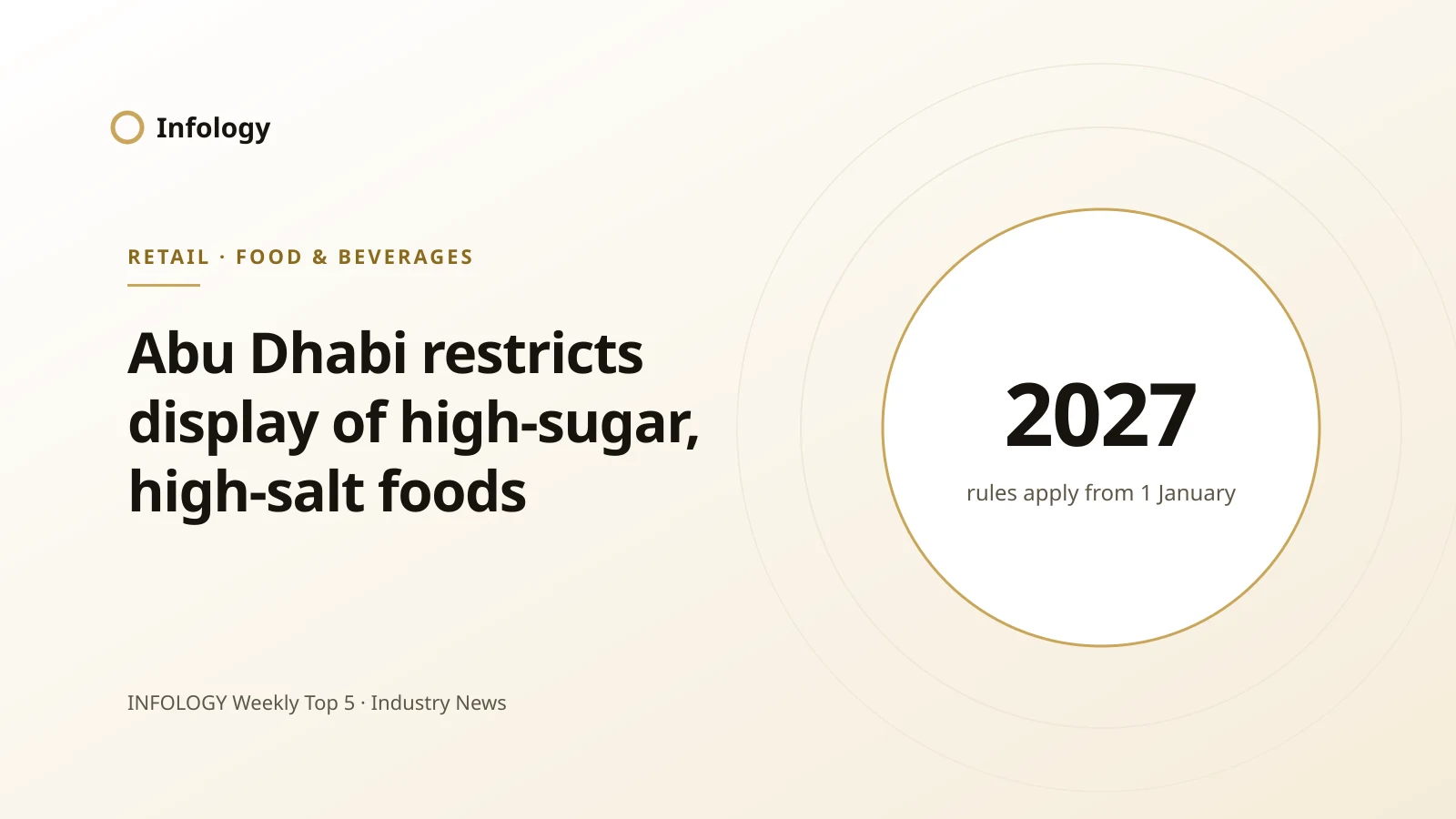
The measures form part of the Abu Dhabi Healthy Living Strategy, announced in November 2025, which focuses on physical activity, diet, health awareness, sleep and mental well-being. The stated approach is to change the food environment rather than rely solely on individual choice.
Other measures reported include a school "Red List" banning unhealthy drinks, slushies, sweets and similar items; tighter fast-food advertising restrictions; Nutri-Mark labels; and a requirement that at least half of children's menu items in covered restaurants meet approved criteria. Al Ain Farms Group's 10–20% added-sugar reductions in juices and dairy were cited as an industry response.
Why This Matters
Retail placement is among the most valuable assets in fast-moving consumer goods. End-of-aisle and checkout positions drive impulse purchases, particularly in sweetened drinks and confectionery. Restricting these positions changes the economics of trade marketing, because paid prominence for qualifying products loses value.
Implications for Businesses
Beverage and snack brands will need new planogram, promotion and trade-spend strategies for Abu Dhabi from January 2027. Lower-sugar and unsweetened lines can compete for premium placements, which creates a commercial incentive to reformulate. Online grocers and delivery platforms must redesign merchandising rules. Restaurant and hospitality groups need compliant menu engineering.
Interpretation: category managers will increasingly use nutrition criteria when allocating space, and suppliers who can evidence compliance gain negotiating power.
Implications for the UAE Market
Abu Dhabi is setting a regulatory template that other emirates may study. Dubai-based retailers operating across emirates face the prospect of different rules by location, which complicates national promotion calendars.
Interpretation: the combination of excise tax, compositional caps and display rules makes the health agenda a multi-lever system, and companies that treat each measure separately will be slower to adapt.
Implications for International Companies
Imported brands rely heavily on retailer-funded visibility in new markets; losing prominent placement raises the cost of building awareness. US and Georgian beverage and food exporters should plan launches around unsweetened, low-sugar and natural-ingredient positioning, and invest in digital and sampling channels less dependent on end-of-aisle displays. Entrants should check how product categories are classified under the criteria before negotiating listing fees.
Suggested Actions for Executives
- Audit Abu Dhabi promotional plans for 2027 against the display restrictions.
- Shift trade budgets toward products that meet the healthy-item criteria.
- Redesign online merchandising and search placement rules.
- Align children's and tourist-area menu items with approved criteria.
- Monitor guidance on classification and enforcement dates.
INFOLOGY Perspective
Decision-makers should ask how far shelf strategy, not only recipe, determines category growth under the new rules. INFOLOGY Management Consulting supports clients with retail channel strategy, competitor benchmarking and regulatory-aware go-to-market planning in the UAE.
Sources: The National, 7 Oct 2026.