Industry Background
Abu Dhabi University is featured as adding programmes in artificial intelligence, cybersecurity, renewable energy, fintech, digital media, game design, public health, psychology and medical laboratory sciences. Its chancellor said students want more than a degree and must learn when to question AI.
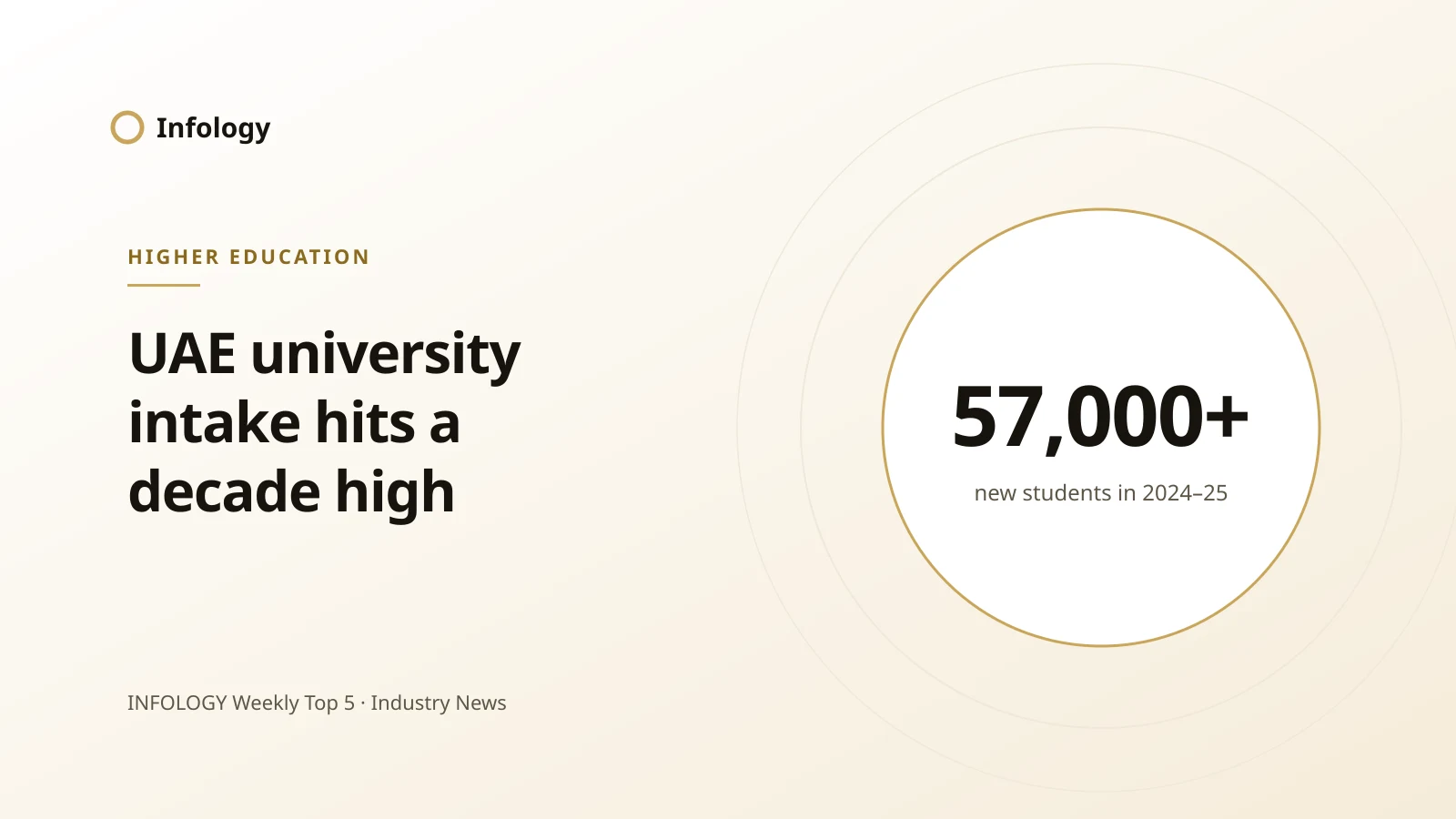
Reported trends include flexible, technology-first learning, more internships and industry projects, and greater emphasis on critical thinking alongside technical skills. This is the oldest of this week's items, retained because the enrolment data underpin the sector's growth outlook.
Why This Matters
Record intake shows demand for higher education is rising even as AI changes the value of specific skills. Institutions are competing to align programmes with future careers, which makes curriculum agility a main source of advantage.
Implications for Businesses
Employers gain a larger graduate pipeline but face mismatches between degrees and current needs. Partnerships for internships, co-designed courses and industry projects can secure talent. Education suppliers, from edtech to student housing, benefit from volume growth.
Interpretation: companies that engage early with universities can shape curricula in their sector.
Implications for the UAE Market
Growth supports the UAE's ambition to attract students and talent, with Dubai and Abu Dhabi hosting expanding university clusters. The enrolment growth coincides with skills platforms and online scholarship rules, creating a more structured, outcome-linked system. Competition will intensify among local and branch campuses for students and employer partnerships.
Implications for International Companies
Foreign universities considering UAE campuses or partnerships find a growing market but also well-established competitors; differentiation by specialist programmes, employer links and recognised credentials matters. Edtech and training firms can target skill-gap areas. Georgian and US institutions should assess whether partnership models are more efficient than full campuses. Note that the enrolment figure is for 2024–25 and covers reporting institutions only.
Suggested Actions for Executives
- Universities: review portfolios against AI, cybersecurity and fintech demand.
- Employers: formalise internship and graduate pipelines with two to three institutions.
- Providers: build outcome evidence and employer endorsements.
- Investors: test demand assumptions for new campuses against capacity and competition.
- Monitor updated enrolment data for 2025–26.
INFOLOGY Perspective
The decision is where to invest in programmes and partnerships as enrolment grows and skills shift. INFOLOGY Management Consulting provides feasibility studies and market-entry analysis for education businesses.
Sources: Gulf News, 29 Sep 2026.